


Batch 11
Understanding Public Policy in India
This programme is designed for future leaders who are keen on creating or influencing Indian Public Policy.
- Join the ISB Executive Network
- Certificate from ISB Executive Education
Programme Overview
With the objective of molding future leaders in the sphere of public policy, ISB Executive Education has designed the Understanding Public Policy in India programme, keeping in mind the challenges that are specific to an Indian context. Participants will learn not only about development of public policy and policy analysis, but also the aspects of finance, ethics and accountability, as well as best practices of public policy management, across the domains of administration and governance. With a keen focus on building capabilities on data analysis, critical thinking, and decision-making, the programme will help you shape and drive policy changes in the political, environmental, and social spheres.
Programme Highlights

Pre-Recorded Videos for Self-paced Learning from Top ISB Faculty

9 Quizzes

Certificate from ISB Executive Education

Discussion Boards

2 Case Study Assignments*
Note:
ISB faculty will not be a part of weekly live sessions or any other live interaction in this programme. We have a curated panel of eminent industry practitioners who will be conducting the weekly live doubt-clearing sessions.
The final number of quizzes, assignments and discussions will be confirmed closer to the programme start.
The programme highlights presented above are approximate, and subject to change depending on the availability and expertise of the teaching faculty, as well as the programme's desired outcomes.
*Assignments are graded either by industry practitioners who are available to support participants in their learning journey and/or by the Emeritus grading team.
World-class Learning with Faculty-led, Pre-recorded Videos

Globally Renowned Faculty
Learn from the best instructors and resources from anywhere in the world.
Access the experts, regardless of their location.

Cohort-based Learning
Learn with an accomplished group of peers and build your network.
Gain cross-industry and cross-functional knowledge.

Flexible Learning
Learn at your own pace with high-quality, pre-recorded faculty videos.
Advance your career without disrupting your busy schedule.
Testimonials






Past Participant Profile
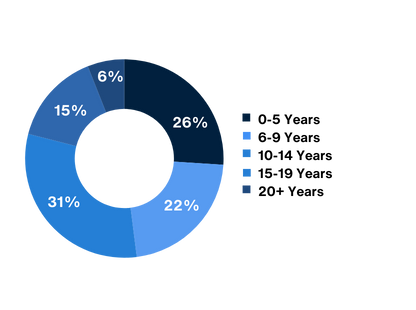
Work Experience
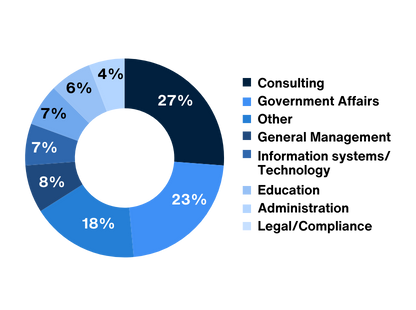
Job Function
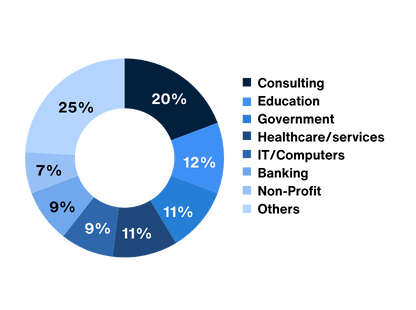
Industry
Key Takeaways
Leverage insights from industry leaders to work towards creating solutions for India's enduring policy and governing challenges
Learn how data and technology can change policymaking and impact the future of public policy in India
Understand how economical and financial reforms have affected major policy drivers and envision the future of India's public policy
Interpret the impact of policy changes through close monitoring by understanding the current challenges faced across different sectors
Why Choose This Programme?

Gain an overview of India's constitution, public policy laws, regulations, and ordinances

Learn at one of the most reputed business schools in India

Learn from Prof. Ashwini Chhatre - one of the most distinguished professors of public policy in India

Envision the future of policymaking in India with guidance from prominent administrators, politicians, and academicians in the field
Who Is This Programme For?
ISB Executive Education's Understanding Public Policy in India Programme is specifically designed for mid-level and senior-level professionals who have a keen interest in shaping policies that will benefit the country and its people.
Ideal candidates include:
Mid-level professionals and/ or consultants in general management, strategy, planning, government and policy advisory roles.
Professionals and/ or consultants who want to understand the challenges faced in the Indian political, economical, and social spheres, and want to learn new trends dominating digital and public-private partnerships.
Senior-level professionals in government roles, non-profits, think tanks, CSRs, consulting, etc. who lead or guide their organisation's public policy decisions or liaise with the government externally and are interested in public policy trends.
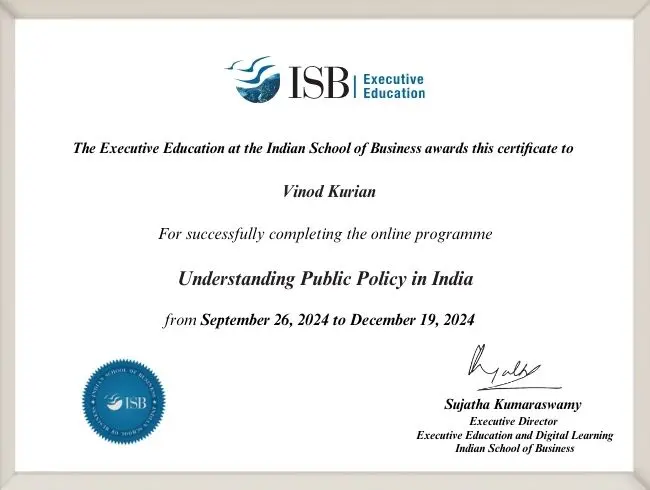
Programme Certificate
On successful completion of the programme, you will be awarded a certificate in Public Policy from ISB Executive Education.
Note: All certificate images are for illustrative purposes only and may be subject to change at the discretion of ISB Executive Education.
Programme Faculty

Ashwini Chhatre
Associate Professor of Economics and Public Policy | Executive Director, Bharti Institute of Public Policy, ISB
Prof. Ashwini Chhatre was the first Giorgio Ruffolo Post-Doctoral Fellow in Sustainability Science at Harvard University from 2006 to 2007 and has spent 11 years working in di...
Programme Modules
Module 1: What is Public Policy?
Context in Which Policies are Formulated
Instruments of Public Policy: Policy
Instruments of Public Policy: Laws and Acts
Instruments of Public Policy: Ordinances
Instruments of Public Policy: Rules
Instruments of Public Policy: Orders
Instruments of Public Policy: Notifications Means of Engagement
Module 2: Constitution of India and the Balance of Powers
Institutions of State: Legislature
System of Parliamentary Standing Committees
Institution of State: Executive (Elected Executive and the Permanent Bureaucracy)
Institutions of State: Judiciary
Statutory Constitutional Authorities: Election Commission, Finance Commission, and CAG
Special Provisions: Schedule V and VI
Special Provisions: 73rd and 74th Amendments
Special Provisions: Article 370A
Module 3: The Framework of Public Administration
Federal Structure and Central, State and Concurrent Lists
Ministries and Departments
The Incongruent Geographies of Public Administration: Tehsil vs Block vs. Forest vs. Police vs. Irrigation
District as the Lynchpin of Implementation
System of Approvals and Accountability
Public Services and the Correct Identification of Beneficiaries
Module 4: The Economics and Finance of Public Policy
Fiscal Policy as a System of Carrots and Sticks
The Budget Process
Sources of Government Expenditure
Sources of Government Revenue
Deficit Finance and Monetary Policy
Macroeconomics Policy: Balancing Unemployment and Inflation
Money Supply and Credit
Ease of Doing Business
Module 5: India Since Independence (Achievements and Failures)
Successes: Election Commission and Green Revolution
Successes: Immunisation and Biometric Identity
Partial Successes: Land Reforms and Decentralisation
Partial Successes: Environmental Protection
Failures: Primary Health and Nutrition
Failures: Primary Education and Justice
COVID Stories: PPE Kits, Food Distribution and Migrant Labour
Module 6: Drivers of Public Policy Over the Decades
Defense of Territory
Economic Development
Equity and Social Justice
Safety Nets
Social Mobilisation
Global Cooperation
Module 7: Economic Reforms
Introduction to Economic Reforms: Life Under License Raj
Reform Efforts Through 1980s and the BoP Crisis
Liberalisation, Privatisation and Globalisation in 1991
Government Intervention in Agricultural Markets
Public Private Partnerships
Debt Finance
Viability Gap Funding
Build Operate Lease Transfer (BOLT) Model
Equity Partnership (Land Pooling)
Module 8: Impact of Digital Technology
eGovernance
eTaal Dashboard
eKYC for Private Services
Direct Benefit Transfer
Land Records
Digital Payments (UPI, FASTag, IMPS)
The New Era of "Gov-Tech" or Government Technology
Module 9: Impact Evaluation
What is Impact Evaluation?
Counterfactual Analysis
Randomised Control Trials (RCTs)
Difference in Differences (DD) or Quasi-Experimental Methods
Regression Discontinuity
Module 10: What is Evidence?
Muddling Through
Absense of Evidence
Multi Causality
Ecological Fallacy
Module 11: Wicked Problems and Complex Adaptive Social Systems
Why are Problems 'Wicked'?
Complex Adaptive Social Systems
Complex Adaptive Social Systems: Emergent Phenomena
Policy Challenge and Response
Module 12: Policy as Experiment
Policy as Experiment
Learnings from Experiments: MGNREGA
Shadow of History: PM-KISAN, Rythu Bandhu, KALIA Scheme
Note: Modules/ topics are indicative only, and the suggested time and sequence may be dropped/ modified/ adapted to fit the total programme hours.
ISB Executive Network
Upon successful completion of the programme, participants will be a part of the ISB Executive Network. Benefits include:
ISB Newsletters with the latest updates
Networking opportunities via ISB Executive Education Network Group on LinkedIn
Exclusive invitations to Online and Offline events like Webinars, Conferences, Master Classes, etc
Preferential pricing with 10% discount on course fee on ISB Executive Education
Open programmes Upgrade to ISB Executive Alumni Group with 100+ learning hours

Complimentary Annual Digital WSJ Membership
As a participant in the programme, you can enjoy a complimentary annual digital membership to The Wall Street Journal, giving you unlimited access to award-winning journalism across any device. From business and world news, to technology and life and arts, WSJ provides ambitious and fact-based reporting that readers can trust.
The Learning Experience
What is it like to learn with the learning collaborator, Emeritus?
More than 300,000 professionals globally, across 200 countries, have chosen to advance their skills with Emeritus and its educational learning partners. In fact, 90 percent of the respondents of a recent survey across all our programme said that their learning outcomes were met or exceeded. All the contents of the course would be made available to students at the commencement of the course. However, to ensure the programme delivers the desired learning outcomes, the students may appoint Emeritus to manage the delivery of the programme in a cohort-based manner during the course period the cost of which is already included in the overall Course fee of the course.
A dedicated programme support team is available 7 days a week to answer questions about the learning platform, technical issues, or anything else that may affect your learning experience.
FAQs
The Programme
What is the Understanding Public Policy in India certification programme by ISB?
The Understanding Public Policy in India certification by ISB Executive Education is a public policy course designed to develop future leaders in public policy, addressing challenges specific to India. The programme covers policy development, analysis, finance, ethics, accountability, and best governance practices making it the most suitable programme for aspiring policy professionals.
How do I know if this Public Policy certification is right for me?
After reviewing the information on the programme landing page, we recommend you submit the short form above to gain access to the programme brochure, which includes more in-depth information. If you still have questions on whether this public policy programme is a good fit for you, please email support.india@emeritus.org, and a dedicated programme advisor will follow up with you very shortly.
What other dates will this programme be offered in the future?
Check back to this programme web page or email us at support.india@emeritus.org to inquire if future programme dates or the timeline for future offerings have been confirmed yet.
The Learning Experience
I have a full-time job. What is the time commitment expected from me?
The ISB Public Policy programme has been designed with your busy schedule in mind. You will be required to commit not more than four to six hours per week enabling you to benefit from this transformative programme while fulfilling your day-to-day work responsibilities.
What is the mode of the programme?
This programme is designed to give flexible learning given the time constraints of working professionals and contains high-quality pre-recorded videos with the globally renowned faculty from ISB. The programme contains pre-recorded videos, case studies, quizzes, assignments and discussion boards.
Are there live sessions in the programme?
There are live webinars with programme coordinators and industry experts also called Emeritus office hours, every week for doubt-solving and any discussion regarding the curriculum. There are no live sessions with ISB Faculty.
What if I miss the assignments for a particular week? Can I attempt them later?
An assignment that is not submitted by the due date is late. Late assignments will be accepted until one week after the programme end date, which is published on the programme homepage. It is strongly recommended that you attempt and submit the assignments every week for a holistic learning experience. Late submissions will be graded at the end of the course.
What is it like to learn with the learning collaborator, Emeritus?
More than 300,000 professionals globally, across 200 countries, have chosen to advance their skills with Emeritus and its educational learning partners. In fact, 90 percent of the respondents of a recent survey across all our programs said that their learning outcomes were met or exceeded. All the contents of the course would be made available to students at the commencement of the course. However, to ensure the program delivers the desired learning outcomes, the students may appoint Emeritus to manage the delivery of the program in a cohort-based manner during the course period the cost of which is already included in the overall Course fee of the course. A dedicated program support team is available 7 days a week to answer questions about the learning platform, technical issues, or anything else that may affect your learning experience.
How does the ISB Certificate Programme in IT Project Management help you transition into an IT project manager role?
The ISB Certificate Programme in IT Project Management helps professionals transition into IT project manager roles by combining practical learning with real-world project execution frameworks. The curriculum covers Agile project management, risk management, stakeholder communication, and IT project lifecycle management, enabling learners to understand how technology projects are planned and delivered. The programme includes a capstone project, where learners apply project management concepts to simulated real-world IT scenarios. This hands-on experience helps participants build practical expertise while strengthening their project management portfolio, making them better prepared for project manager and delivery management roles. Participants also gain exposure to various trending project management concepts and tools like JIRA, Asana, Wrike, Confluence, Trello, Gantt chart planning frameworks, etc. helping them understand how modern teams manage project workflows, task tracking, and collaboration in IT environments.
How is Generative AI and Agentic AI used in the ISB Certificate Programme in IT Project Management Programme?
The ISB Online IT Project Management programme integrates Generative AI and Agentic AI to transform project workflows. You’ll learn to use Generative AI for risk assessment, reporting, and documentation, while leveraging Agentic AI frameworks like AutoGen, CrewAI, and LangChain to build autonomous agents for planning, execution, and KPI tracking. Alongside tools such as JIRA, Asana, Wrike, and Notion AI, the programme helps you automate scheduling, resource allocation, forecasting, and decision-making—bridging theory with hands-on application for a competitive edge.
Is there an option to make flexible payments for this ISB Online IT Project Management Programme?
Yes, the flexible payment option allows a participant to pay the programme fee in instalments. This option is made available on the payment page and should be selected before submitting the payment. Please reach out to your programme advisor or email us at support.india@emeritus.org for more information.
Early registrations are encouraged. Join now.
Flexible payment options available.
Starts On